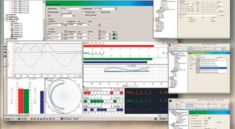


Proprietary trading firms have gone from an industry niche to one of the fastest-growing segments in retail trading. The pitch to traders is irresistible: prove your skill on an evaluation, trade the firm’s capital, keep a share of the profits. The pitch to entrepreneurs is just as strong: recurring evaluation fees, engaged users, and a business model that scales without the deposit-handling burden of a traditional brokerage.
But the firms that dominate this space did not win on marketing. They won on infrastructure. Here is what the prop model demands from technology, and why so many new entrants underestimate it.
Why Prop Firms Are Not “Brokerages Lite”
From the outside, a prop firm looks like a simplified brokerage: no client deposits to safeguard, no liquidity spread to manage, evaluation fees paid upfront. In reality, the technology burden runs the other direction.
A traditional broker manages client money. A prop firm manages client behavior, at scale, in real time. Every funded trader is trading the firm’s capital, which means every position on the book is the firm’s risk. Rule enforcement cannot be a nightly batch job. Daily drawdown limits, maximum position sizes, prohibited trading windows around news events, consistency rules: all of it has to be monitored live and enforced automatically, because a single unwatched account can erase the margin from hundreds of evaluation fees.
That is why serious operators build on an enterprise-ready trading platform rather than consumer-grade tools. The difference shows up in exactly the places prop economics are decided: server-side rule enforcement, real-time exposure aggregation across thousands of accounts, and back-office automation that handles evaluations, resets, and payouts without manual work.
The Evaluation Engine Is the Product
Traders judge a prop firm by three things: fair rules, a stable platform, and fast payouts. All three are technology problems.
Fair rules require precise, transparent tracking. If a trader breaches a drawdown limit by two dollars during a spread spike, your platform’s data is the evidence. Ambiguity here destroys trust, and trust is the entire product; prop firm communities are vocal, and a reputation for arbitrary breaches spreads within days.
A stable platform matters even more here than in retail brokerage, because evaluation traders are on deadlines. A server outage during a funded trader’s best session is not an inconvenience; it is a refund request, a dispute, and a public complaint.
Fast payouts depend on back-office automation. Firms processing profit splits manually hit an operational wall within months of scaling.
Build, Buy, or White Label: The Prop Edition
New prop firms face the same technology decision as new brokers, with sharper timelines. The market is moving quickly, and an eighteen-month platform build means launching into a different competitive landscape than the one you planned for.
The honest analysis of whether brokers should rely on white label trading platforms applies with extra force to prop firms: licensed infrastructure gets you to market in weeks, carries a proven uptime record you can cite to skeptical traders, and shifts platform maintenance to a team that does nothing else. The counterargument, differentiation through proprietary technology, is weaker in prop than in brokerage, because prop firms differentiate on rules, capital terms, and payout speed, not on charting engines.
What a prop operation should insist on from any platform partner: multi-account management for running thousands of evaluations simultaneously, configurable rule engines rather than hard-coded logic, dealer and risk dashboards built for monitoring behavior rather than just exposure, and APIs that connect the platform to your CRM, evaluation logic, and payment stack.
Purpose-built technology for proprietary trading firms bundles these into one stack: trading server, client terminals, mobile apps, risk tools, and the account-management layer that evaluation businesses run on. The alternative, stitching a retail platform to homemade rule scripts, is where most new prop firms quietly break.
The Consolidation Ahead
The prop space is following a familiar curve: explosive entry, rising trader expectations, then consolidation around the firms that operate reliably. Regulatory attention is increasing, payout expectations are tightening, and traders have learned to check a firm’s infrastructure record before paying for an evaluation.
That consolidation will not be won by the loudest marketing. It will be won by the firms whose rules enforce themselves, whose platforms hold up on nonfarm payroll Fridays, and whose payouts arrive when promised. All three are decided long before launch, in the technology choice. Choose like the business depends on it, because in prop trading, it visibly does.